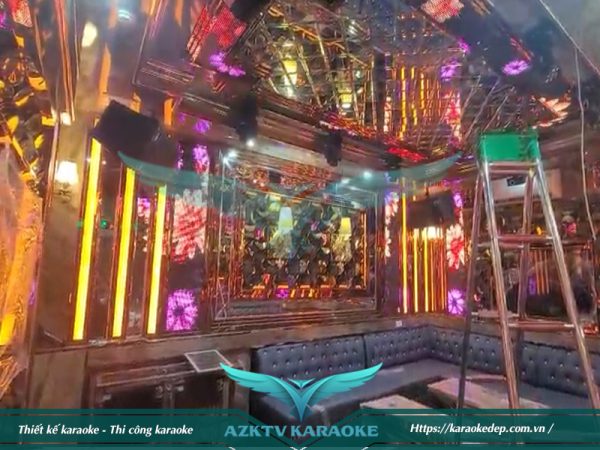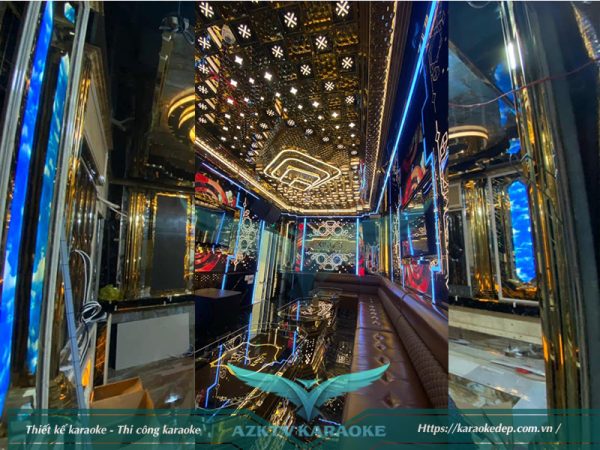





Music box rooms, also called mini karaoke rooms or small KTV booths, are popular because many compact rooms can earn more from a floor than a few large ones. The catch is sound: when rooms are only a few metres wide, noise travels through walls, doors, ceilings and air-conditioning ducts. This guide explains how to plan music box soundproofing in Hanoi for investors from China, Taiwan, Korea and Japan. For the full project path, read our guide to karaoke design and construction in Hanoi.
Why small rooms are harder to soundproof
A small room has little air volume, so sound pressure builds quickly. Walls are shared with neighbours on both sides, and every wall carries a door, a cable opening or a duct. The weakest point decides the result, so soundproofing is a system, not a single product.
The four things to control
- Walls: use double-layer partitions with an absorbent core, built from slab to slab so sound cannot pass above the ceiling line.
- Ceiling: a sealed, layered ceiling reduces sound escaping upward; keep lighting recesses and speaker cut-outs tight.
- Floor: a floating or well-sealed floor edge limits vibration from bass.
- Door: usually the weakest link, which is why it gets its own section below.
The door matters most
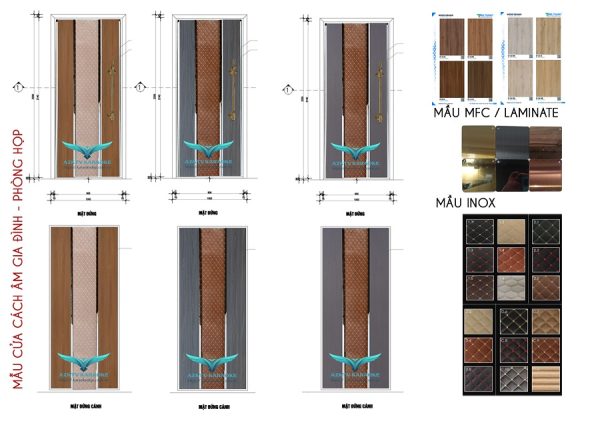
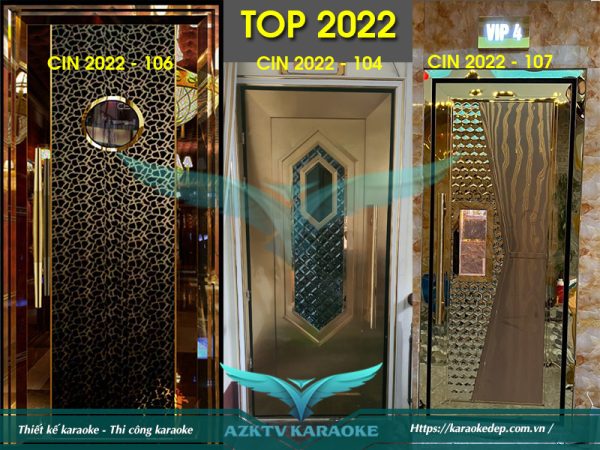
A thin hollow door undoes good wall work. A proper soundproof karaoke door, sometimes sold as a music box door, has a solid core, perimeter seals and a drop seal at the threshold. It should close firmly without slamming and include a viewing window so staff can check the room. Choose the door size to suit trolleys and wheelchairs, and agree the finish with the interior design.
Air-conditioning and ventilation
Ducts carry sound between rooms. Use short lined branches, silencers where needed, and avoid one shared duct linking two rooms without treatment. Guests also need fresh air, so the ventilation plan and the acoustic plan must be done together.
Furniture and layout
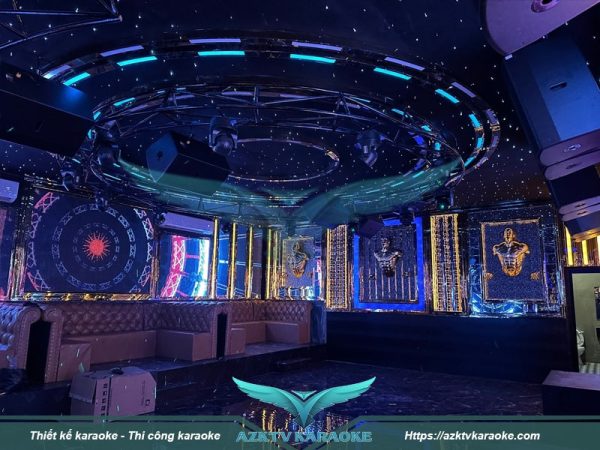
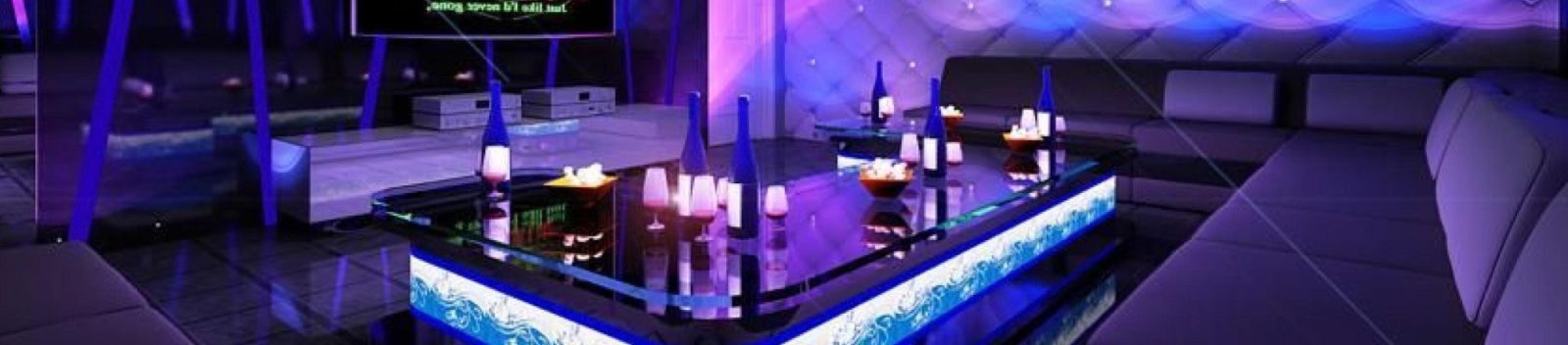
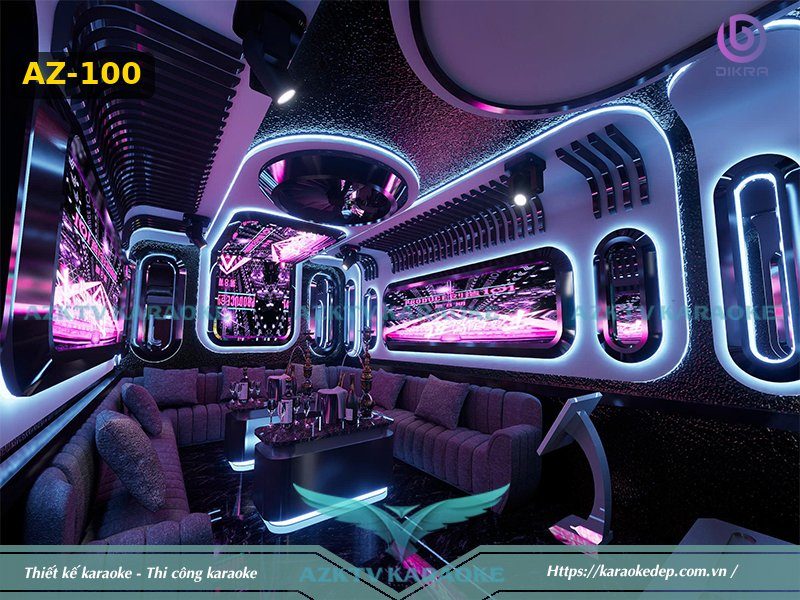
Keep furniture compact and fixed where possible. A built-in sofa saves space, and a slim karaoke table gives guests room for drinks without blocking the walkway. Place the screen and speakers away from shared walls when the room shape allows it.
Sound system and lighting
Speaker choice and volume limits affect how much sound the room must contain. A limiter on the amplifier protects both neighbours and equipment. Lighting should be simple, with warm, dimmable scenes. For how a single premium room is specified, see our VIP karaoke room design and fit-out.
Fire safety
Acoustic materials must be chosen with Vietnamese fire-prevention rules in mind, including finishes, wiring and exit routes. Requirements vary by project, so confirm them with the authority and your design team before ordering. If the music box rooms sit inside a larger venue, our note on turnkey karaoke bar construction in Hanoi shows how zones fit together.
Working with AZKTV
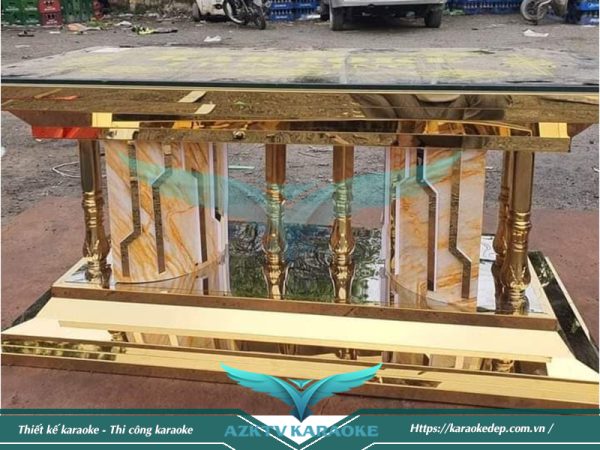
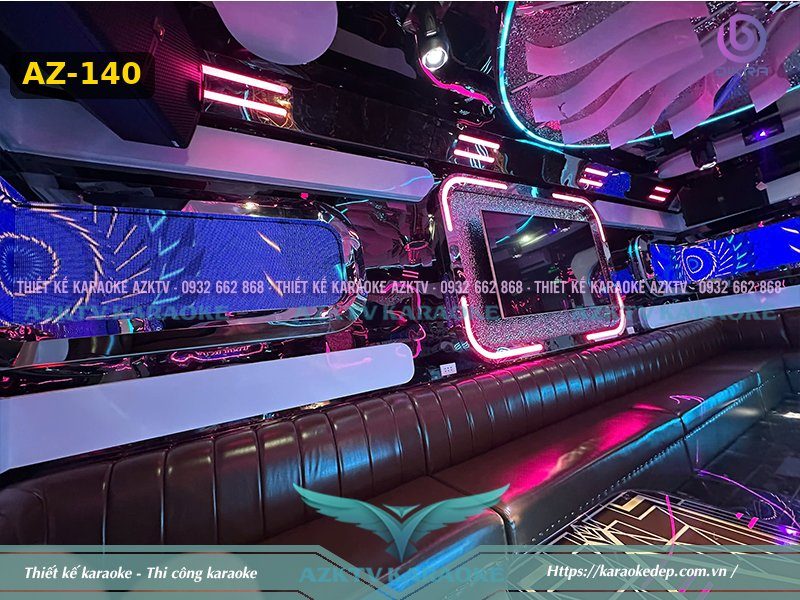
AZKTV handles karaoke design and karaoke construction as two separate contracts, and produces both the soundproof doors and the karaoke tables used in the rooms, so measurements and finishes match.
FAQ
How small can a music box room be?
It depends on the number of guests and the equipment. We recommend sending your floor plan so we can propose a layout rather than quoting a fixed minimum.
Can existing rooms be upgraded?
Often yes: doors, seals, ceilings and ducts can be improved. We need to see the room to say how much improvement is realistic.
Do you supply the door and the table?
Yes. AZKTV makes soundproof karaoke doors and karaoke tables and can match them to the room.
Plan your Hanoi music box with AZKTV
- Hotline: 0932 662 868 (additional line 0933 357 899)
- Email: thietke@karaokedep.com.vn
- Hanoi office: 4th floor, 25 Vũ Ngọc Phan, Đống Đa, Hanoi
- Da Nang office: 119 Nguyễn Thị Cận, Cẩm Lệ, Da Nang
- Ho Chi Minh City office: A93 Tô Ký, District 12
Send the floor plan and the number of rooms you have in mind, and we will reply with a first sound-control and layout outline.